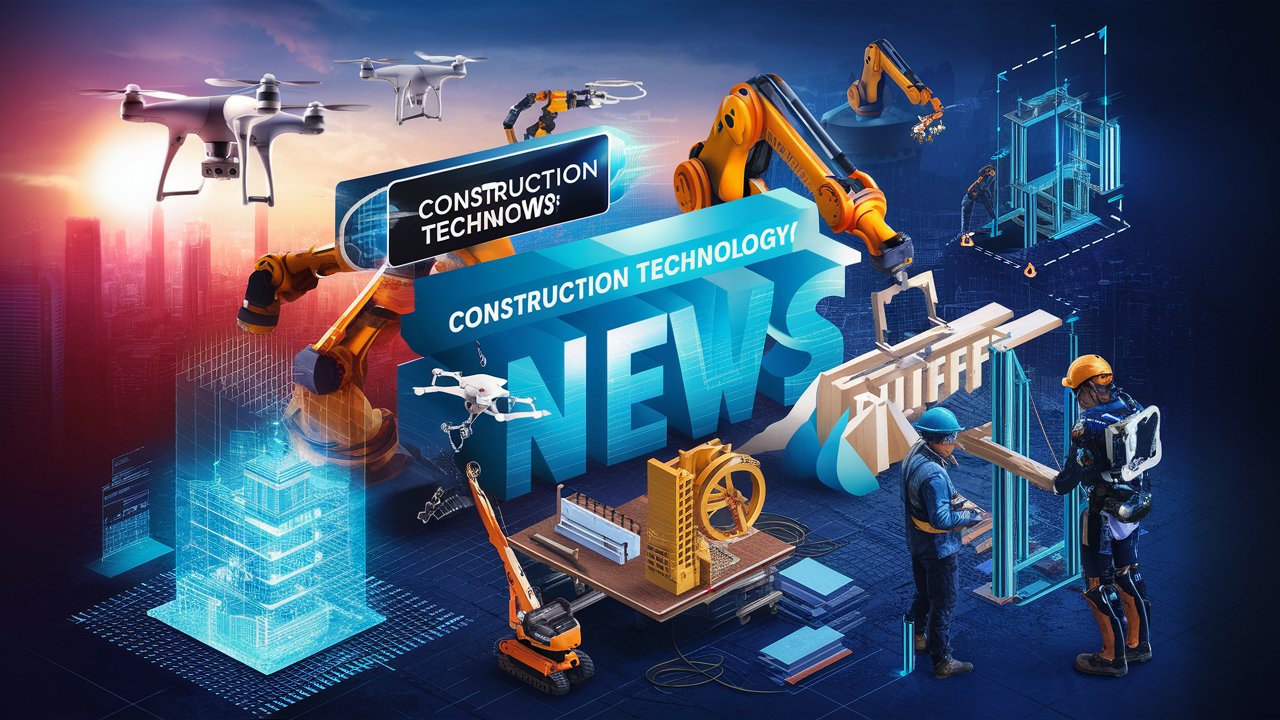
Construction Technology News Today: Innovations Shaping the Future of Building
The world of construction is undergoing a massive transformation, driven by rapid advancements in technology. Construction technology news today highlights how digital tools, automation, and sustainable innovations are redefining the way buildings and infrastructure are designed, built, and maintained. From artificial intelligence and robotics to 3D printing and green construction materials, the industry is embracing a new era of efficiency, safety, and sustainability. These developments are not only improving project timelines and cost management but also addressing global challenges such as labor shortages and environmental impact.
The Rise of Smart Construction Technology
Construction technology news today is dominated by the rise of smart construction systems that integrate digital tools with physical processes. Smart construction involves the use of sensors, drones, and Internet of Things (IoT) devices to collect real-time data from job sites. This data helps project managers monitor progress, track equipment usage, and ensure worker safety. Artificial intelligence (AI) algorithms analyze this information to predict potential delays, optimize resource allocation, and improve decision-making. The result is a more efficient, transparent, and cost-effective construction process. Smart construction also enhances collaboration among architects, engineers, and contractors through cloud-based platforms that allow seamless communication and data sharing.
Robotics and Automation in Construction
Automation is one of the most significant trends in construction technology news today. Robots are now being used for tasks such as bricklaying, concrete pouring, and welding, reducing the need for manual labor and minimizing human error. Autonomous vehicles and drones are revolutionizing site inspections, surveying, and material transportation. These technologies not only speed up construction timelines but also improve safety by handling dangerous or repetitive tasks. For example, robotic arms can perform precision work in hazardous environments, while drones provide aerial views that help identify structural issues early. As automation continues to evolve, it is expected to play a crucial role in addressing labor shortages and increasing productivity across the construction industry.
3D Printing and Modular Construction
Another major highlight in construction technology news today is the growing adoption of 3D printing and modular construction. 3D printing allows builders to create complex structures layer by layer using specialized materials such as concrete or composite polymers. This method significantly reduces waste, lowers costs, and shortens construction time. Modular construction, on the other hand, involves manufacturing building components in controlled factory environments and assembling them on-site. This approach ensures higher quality control, reduces weather-related delays, and enhances sustainability. Together, 3D printing and modular construction are redefining how buildings are designed and delivered, paving the way for faster, more affordable, and eco-friendly construction solutions.

Artificial Intelligence and Data Analytics in Construction
Artificial intelligence is at the forefront of construction technology news today, transforming how projects are planned and executed. AI-powered software can analyze vast amounts of data to forecast project risks, estimate costs, and optimize scheduling. Machine learning algorithms help identify patterns in construction performance, enabling companies to make data-driven decisions that improve efficiency and reduce waste. Predictive analytics also plays a key role in maintenance, allowing for early detection of equipment failures and structural weaknesses. By integrating AI into construction management systems, companies can enhance accuracy, reduce human error, and achieve better project outcomes.
Sustainable and Green Construction Technologies
Sustainability is a recurring theme in construction technology news today, as the industry seeks to reduce its environmental footprint. Green construction technologies focus on using renewable materials, energy-efficient systems, and waste reduction strategies. Innovations such as self-healing concrete, solar-integrated building materials, and smart energy management systems are becoming increasingly popular. Additionally, sustainable design practices emphasize the use of recycled materials and eco-friendly construction methods. These advancements not only help combat climate change but also lower operational costs and improve building performance. The shift toward sustainability reflects a growing awareness of the need for responsible construction practices that balance progress with environmental stewardship.
The Role of Digital Twins in Modern Construction
Digital twin technology is one of the most exciting developments in construction technology news today. A digital twin is a virtual replica of a physical building or infrastructure project that allows engineers and managers to simulate, monitor, and optimize performance in real time. By integrating data from sensors, IoT devices, and building information modeling (BIM) systems, digital twins provide valuable insights into construction progress, energy usage, and maintenance needs. This technology enables proactive decision-making, reduces downtime, and enhances the overall lifecycle management of buildings.
The Future of Construction Technology
Looking ahead, construction technology news today points to a future where automation, AI, and sustainability converge to create smarter, safer, and more efficient construction environments. The integration of blockchain for transparent project management, augmented reality for immersive design visualization, and advanced robotics for precision building will continue to shape the industry. As technology evolves, collaboration between tech companies, construction firms, and governments will be essential to ensure innovation benefits all stakeholders. The future of construction lies in embracing digital transformation while maintaining a strong focus on sustainability and human-centered design.
Conclusion
The landscape of construction technology news today reveals an industry in the midst of a digital revolution. The adoption of smart technologies is not just improving efficiency but also redefining safety, quality, and environmental responsibility. As the construction sector continues to evolve, staying informed about the latest technological trends will be crucial for professionals and organizations aiming to remain competitive. The future of construction is intelligent, sustainable, and interconnected—driven by technology that builds a better world.
Frequently Asked Questions
1. What is construction technology?
Construction technology refers to the use of advanced tools, machinery, software, and materials to improve the efficiency, safety, and sustainability of construction projects.
2. What are the latest trends in construction technology today?
Current trends include AI and data analytics, robotics, 3D printing, modular construction, digital twins, and sustainable building materials.
3. How is AI used in construction?
AI is used for project planning, risk assessment, cost estimation, and predictive maintenance, helping companies make data-driven decisions and improve efficiency.
4. What is the role of 3D printing in construction?
3D printing allows for the creation of complex structures quickly and cost-effectively, reducing waste and enabling innovative architectural designs.
5. How does technology improve safety in construction?
Technologies like drones, sensors, and wearable devices monitor site conditions, detect hazards, and ensure compliance with safety standards.
6. What are digital twins in construction?
Digital twins are virtual models of physical structures that allow real-time monitoring, simulation, and optimization of building performance.
7. Why is sustainability important in construction technology?
Sustainability reduces environmental impact, conserves resources, and promotes long-term efficiency, making it a key focus of modern construction innovation.