Lions vs Colts 2024 Player Stats Breakdown: Goff, Gibbs, Richardson & More
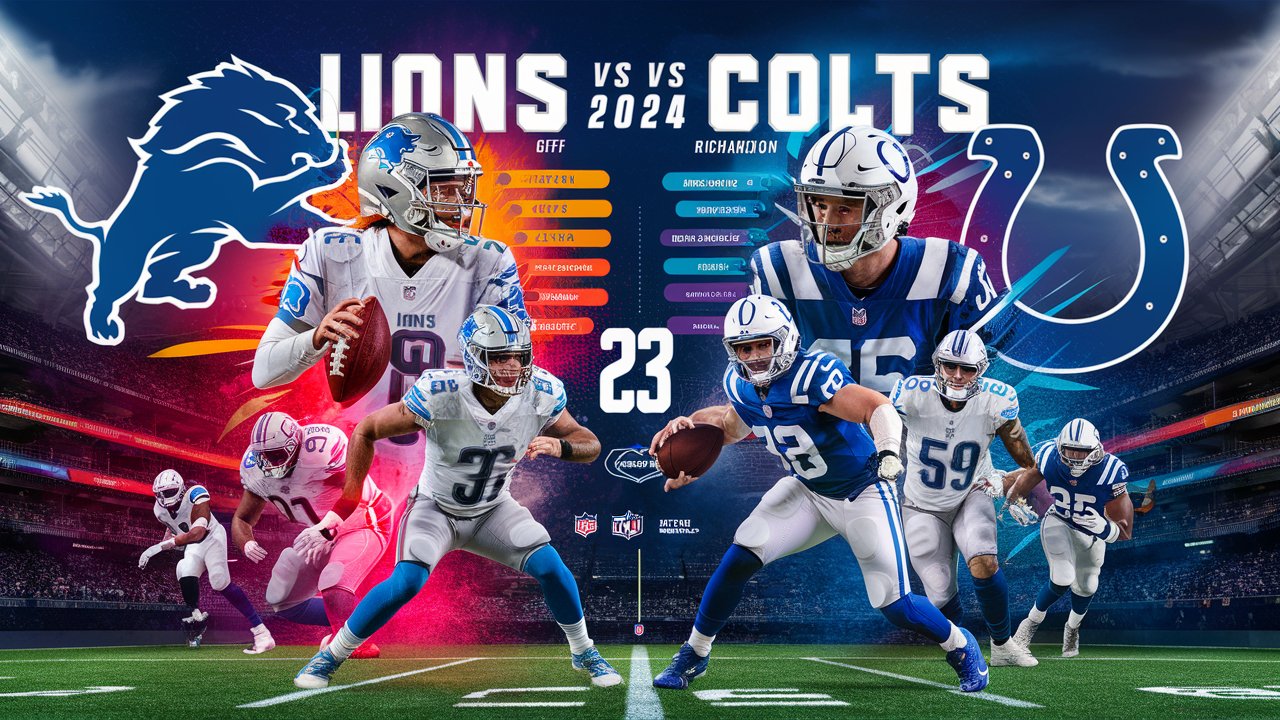
When the Detroit Lions faced off against the Indianapolis Colts, it was more than just a regular NFL game — the matchup showcased some standout individual performances, solid strategic execution, and a defensive grit that swung the result in Detroit’s favor. For fans, analysts, and bettors alike, diving into the player stats from that game paints a much clearer picture of how the detroit lions vs colts match player stats where the Colts fell short, and which athletes made the most impact. In this article, we’ll break down the key statistical contributions from both teams — focusing on passing, rushing, and defensive metrics — to highlight how the Lions executed their game plan and which Colts players showed flashes of promise. By analyzing the numbers, you’ll get a full understanding of not just who performed well, but why the Lions came out ahead in this head-to-head clash.
1. Passing Performance – Quarterback Stats and Impact
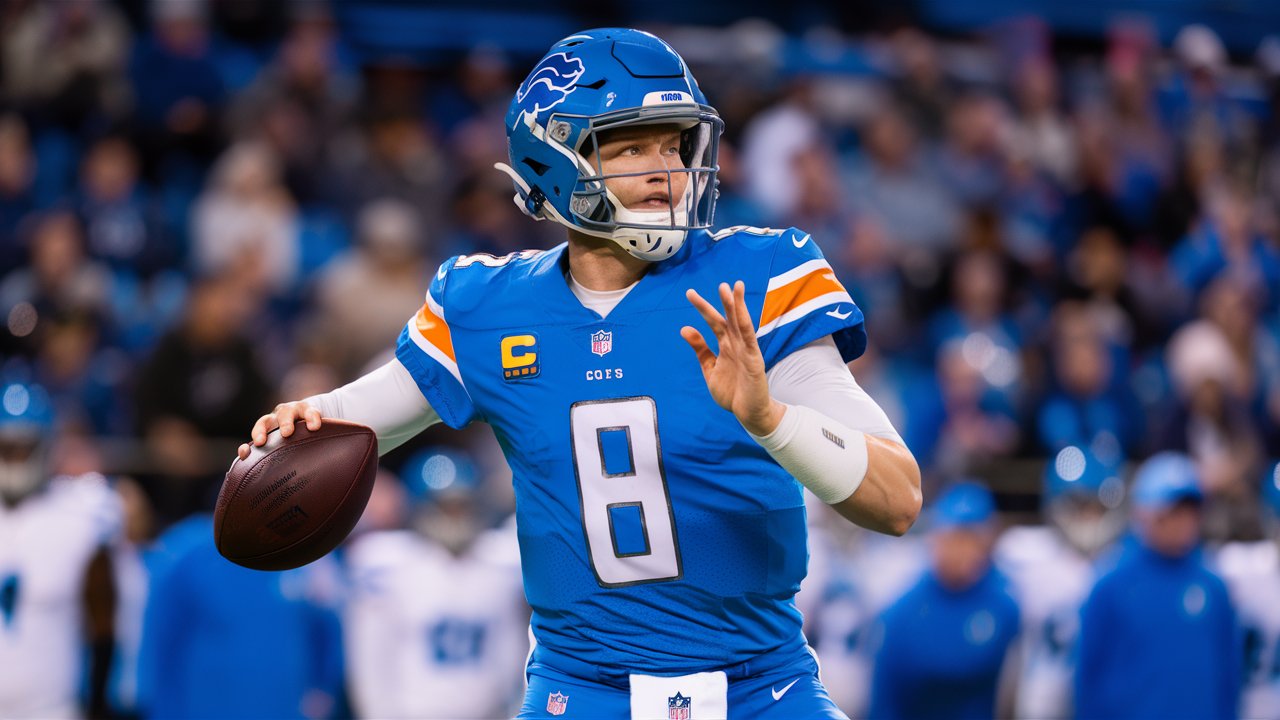
In the Lions vs Colts matchup, Jared Goff, quarterback for Detroit, delivered a very efficient performance, completing 26 of 36 passes for 269 yards without throwing an interception. His ability to maintain possession and convert key downs by air was a foundational part of Detroit’s offensive success. On the opposite side, Anthony Richardson, the young Colts quarterback, struggled to find rhythm — he completed 11 of 28 pass attempts for 172 yards, and likewise did not throw a touchdown. Richardson also contributed some ground yards, but his inaccuracy through the air limited Indianapolis’s ability to sustain long drives. The contrast in their passing stats reflects not just execution, but game management: Detroit’s offense was balanced and disciplined, while the Colts were unable to consistently generate big air plays or avoid pressure, partly due to Goff taking advantage of favorable matchups in the secondary.
2. Rushing Breakdown – Running Back Contributions and Ground Game
The ground game was where the Lions truly asserted their dominance against the Colts. Jahmyr Gibbs was the engine of Detroit’s rushing attack, carrying the ball 21 times for 90 yards, and scoring two touchdowns. His runs were not just about volume, but about impact — key short-yardage plays and red-zone efficiency. Meanwhile, David Montgomery, another vital piece of the Lions’ backfield, also contributed significantly; he totalled 73 yards from combined rushing and receiving, and reached the end zone with a goal-line carry. This run-heavy approach allowed Detroit to control possession (they held the ball for 37:01, compared to Indianapolis’s 22:59) and tire out the Colts defense over the course of the game. On the Colts’ side, Jonathan Taylor attempted to spark something on the ground, but was held relatively in check: he carried the ball 11 times for 35 yards, which limited their ability to balance their attack and sustain drives.
3. Receiving Leaders – Who Made Plays in the Passing Game
Receiving for the Lions, Jameson Williams made a notable impact despite limited volume: he had 5 receptions on 7 targets for 64 yards, averaging 12.8 yards per catch. His big-play potential helped stretch the field even though the detroit lions vs colts match player stats. On the Colts’ side, Michael Pittman Jr. was their most productive pass-catcher, hauling in 6 catches (on 7 targets) for 96 yards, averaging 16.0 yards per reception. Pittman’s yardage showed that Indianapolis had some success on the outside, but without consistent quarterback play or effective rushing support, his production couldn’t change the momentum.
4. Scoring & Key Plays – Touchdowns, Field Goals, and Game-Deciding Moments
In this matchup, the Lions leaned heavily on their ground game for scoring. Gibbs’ two rushing touchdowns came in critical moments — one was a 1-yard plunge early in the red zone, and the other came on a 5-yard run later in the game to further extend their lead. David Montgomery added a 6-yard rushing touchdown, giving Detroit a strong cushion. As for kicking, the Lions’ Jake Bates capped off the game with a 56-yard field goal, underscoring Detroit’s confidence in both their offense and special teams. On the Colts’ side, their only scoring came from their kicker, Matt Gay, who converted field goals, but their inability to reach the end zone proved costly.
5. Defensive and Game Control – How Detroit’s Defense Held the Colts
A significant part of Detroit’s victory came from defensive discipline and control. The Lions’ defense limited the Colts to just 6 points, shutting down any sustained drives in the red zone and keeping Indianapolis from converting in critical moments. According to post-game analysis, this was part of a broader defensive trend for Detroit, where they had not allowed a touchdown for multiple quarters across recent games, showing remarkable consistency in their second-half performances. While individual defensive stat lines (like sacks or turnovers) aren’t always well-highlighted in publicly available summaries, the game flow indicates that Detroit applied enough pressure, maintained lane discipline on runs, and forced the Colts into limited third-down and red-zone success. That defensive reliability enabled them to lean into a conservative, ground-based offense and ultimately control the tempo.
6. Historical Context & Head-to-Head Insights
Looking at the broader Lions vs Colts rivalry helps to frame this game’s importance. Historically, the two teams have a very even matchup in terms of wins and losses. According to head-to-head records, their meetings have been competitive over decades, and while neither side has dominated entirely, each game often comes down to execution, momentum, and key individual contributions. The 2024 victory for Detroit, which extended their winning streak, is consistent with how they’ve recently approached games: strong on the ground, disciplined in defense, and efficient in the air.
Conclusion
The Detroit Lions vs Colts match player stats from their most recent meeting tell a story of balance, control, and execution. Detroit leaned into a ground-heavy attack dominated by Jahmyr Gibbs and David Montgomery, paired with precise yet safe passing from Jared Goff, to build and maintain a lead. Meanwhile, the Colts struggled to convert through the air with Anthony Richardson, and their ground game couldn’t consistently challenge the Lions’ defensive front. Detroit’s defense deserves recognition for limiting Indianapolis to just six points, proving that the Lions’ identity in that game was not flashy, but fundamentally sound. This statistical breakdown not only highlights key performers, but also reflects how game planning, discipline, and execution aligned for Detroit to secure a convincing win.
Frequently Asked Questions (FAQ)
1. Who was the top performer for the Lions in the game?
The standout for Detroit was Jahmyr Gibbs, who ran 21 times for 90 yards and scored two rushing touchdowns. His contribution on the ground was decisive in establishing and maintaining momentum.
2. How did Jared Goff perform against the Colts?
Goff completed 26 of 36 passes for 269 yards, without throwing any interceptions. His efficient game management helped the Lions convert key downs and avoid costly mistakes.
3. What went wrong for the Colts in the passing game?
Anthony Richardson struggled with accuracy, completing only 11 of 28 passes for 172 yards. The lack of passing efficiency limited the Colts’ ability to sustain drives and threatened their offensive rhythm.
4. Did the Lions depend solely on rushing to score?
Not entirely, but the rushing game was central. Gibbs and Montgomery combined for three touchdowns on the ground, and the Lions backed that up with a field goal from Jake Bates to round out their scoring.
5. How did the Lions’ defense contribute to the win?
Detroit’s defense was disciplined, limiting the Colts to just six points. They prevented the Colts from converting in critical moments, particularly in the red zone, which allowed the Lions’ offense to control the game tempo.
6. Is there a significant rivalry between the Lions and Colts historically?
While the Lions and Colts do not have one of the league’s fiercest rivalries, their head-to-head history is quite balanced, with many games decided by key individual performances and execution, rather than sustained dominance by one side.