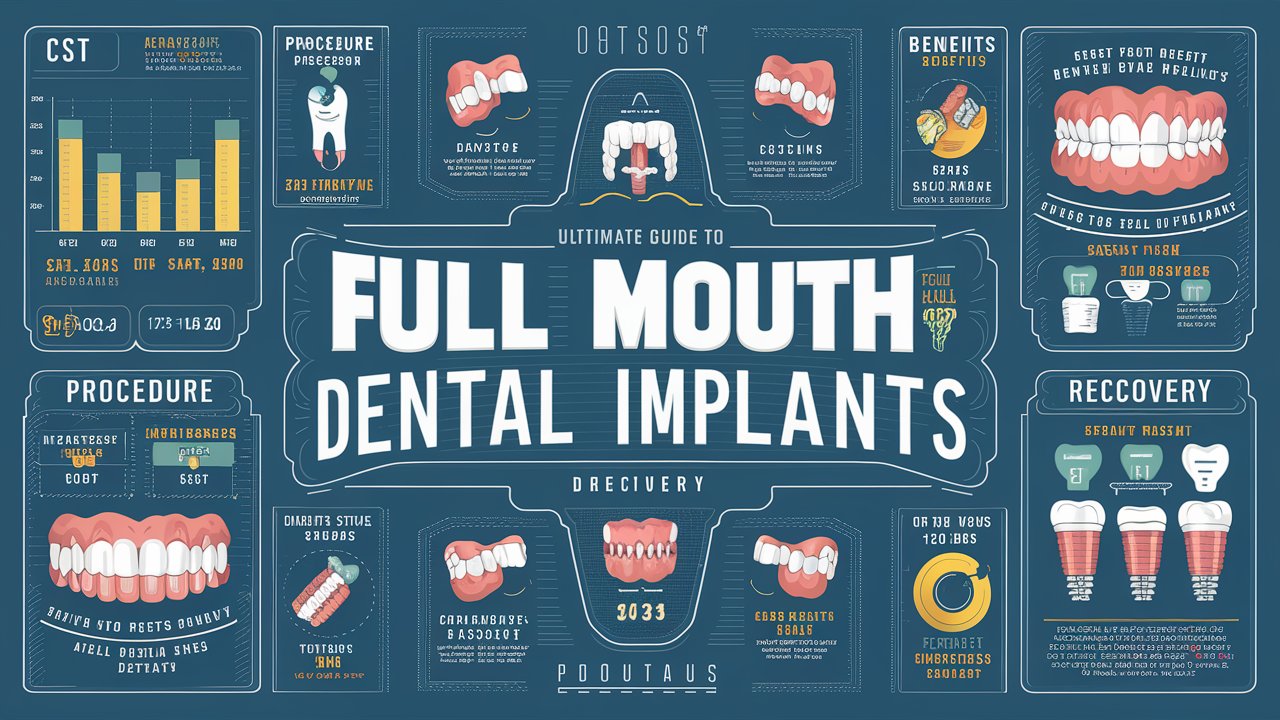
The Ultimate Guide to Full Mouth Dental Implants: Cost, Procedure, Benefits, and Recovery
The demand for full mouth dental implants has grown rapidly as more people seek permanent solutions for missing or damaged teeth. Unlike traditional dentures, which can slip or cause discomfort, full mouth dental implants provide a stable, natural-looking, and long-lasting replacement for an entire set of teeth. They restore not only the ability to chew and speak comfortably but also the confidence that comes with a beautiful smile. This comprehensive guide explores everything about from the procedure and benefits to cost, recovery, and maintenance—helping patients make informed decisions about their oral health and smile restoration.
What Are Full Mouth Dental Implants?
Full mouth dental implants are a complete tooth replacement solution designed for individuals who have lost most or all of their teeth. Instead of replacing each tooth individually, this procedure uses a series of strategically placed titanium implants to support a full arch of prosthetic teeth. These implants act as artificial tooth roots, fusing with the jawbone to create a strong and stable foundation. The prosthetic teeth are then attached to the implants, providing a natural appearance and function similar to real teeth can replace both the upper and lower arches, offering a permanent alternative to removable dentures.
How Full Mouth Dental Implants Work
The process of involves several stages, each crucial for achieving long-term success. The first step is a comprehensive dental examination, including X-rays and 3D imaging, to assess bone density and oral health. Once the treatment plan is developed, the dentist surgically places the implants into the jawbone. Typically, four to eight implants are used per arch, depending on the patient’s bone structure and needs. Over the next few months, a process called osseointegration occurs, during which the implants fuse with the bone to create a stable base. After healing, abutments are attached to the implants, and custom-made prosthetic teeth are secured in place. The result is a full set of teeth that look, feel, and function like natural ones.
Benefits of Full Mouth Dental Implants
The advantages of extend far beyond aesthetics. One of the most significant benefits is improved oral function. Patients can eat, speak, and smile with confidence, without worrying about slipping dentures or discomfort. Dental implants also help preserve jawbone density by stimulating bone growth, preventing the bone loss that typically occurs after tooth loss. This maintains facial structure and prevents the sunken appearance often associated with missing teeth. Additionally are incredibly durable, lasting decades with proper care. They eliminate the need for adhesives, reduce gum irritation, and provide a permanent, low-maintenance solution for complete tooth replacement.
Types of Full Mouth Dental Implants
There are several types of full mouth dental implants, each designed to meet different patient needs and preferences:
- All-on-4 Dental Implants: This technique uses four strategically placed implants to support a full arch of teeth. It’s ideal for patients with limited bone density and offers a faster recovery time.
- All-on-6 Dental Implants: Similar to the All-on-4 method but with six implants for added stability and support, especially for patients with stronger bone structure.
- Implant-Supported Dentures: These dentures snap onto implants for a secure fit but can be removed for cleaning. They offer a balance between traditional dentures and permanent implants.
- Zygomatic Implants: Used for patients with severe bone loss, these implants anchor into the cheekbone instead of the jawbone, eliminating the need for bone grafting.
Each type of implant system provides unique benefits, and the choice depends on factors such as bone health, budget, and personal preference.
The Procedure for Full Mouth Dental Implants
The full mouth dental implant procedure is typically completed in multiple stages. It begins with a consultation and diagnostic imaging to create a personalized treatment plan. During the surgical phase, the dentist places the implants into the jawbone under local anesthesia or sedation. Temporary teeth may be attached immediately, allowing patients to leave the clinic with a functional smile. Over the next few months, the implants integrate with the bone, ensuring long-term stability. Once healing is complete, permanent prosthetic teeth are attached, customized to match the patient’s facial structure and desired aesthetics. The entire process can take several months, but the results are permanent and transformative.
Cost of Full Mouth Dental Implants
The cost of varies depending on several factors, including the number of implants, materials used, and the complexity of the procedure. On average, the cost ranges from $20,000 to $50,000 per arch in the United States. While this may seem expensive, it’s important to consider the long-term value. Unlike dentures or bridges that require frequent replacements, dental implants are a one-time investment that can last a lifetime. Many dental clinics offer financing options or payment plans to make the procedure more affordable. Additionally, some insurance plans may cover part of the cost if the implants are deemed medically necessary.
Recovery and Aftercare for Full Mouth Dental Implants
Recovery after varies from patient to patient but generally involves minimal discomfort. Swelling and mild soreness are common for the first few days and can be managed with prescribed medication. Patients are advised to follow a soft-food diet during the initial healing phase to avoid putting pressure on the implants. Good oral hygiene is essential—brushing gently, rinsing with an antibacterial mouthwash, and avoiding smoking can significantly improve healing. Regular follow-up appointments allow the dentist to monitor progress and ensure the implants are integrating properly. Once fully healed, patients can resume normal eating habits and enjoy the benefits of a strong, natural-looking smile.
Longevity and Maintenance of Full Mouth Dental Implants
With proper care, can last a lifetime. Daily brushing, flossing, and routine dental checkups are essential to maintain oral health and prevent gum disease. Unlike dentures, implants do not require removal or adhesives, making maintenance simple and convenient. Avoiding habits such as smoking or chewing hard objects can prolong the lifespan of the implants. The prosthetic teeth may need occasional adjustments or replacements over time, but the titanium implants themselves are designed to be permanent. Consistent care ensures that the implants remain functional, comfortable, and aesthetically pleasing for decades.
Who Is a Good Candidate for Full Mouth Dental Implants?
Ideal candidates for are individuals who have lost most or all of their teeth and have sufficient bone density to support the implants. Good overall health and healthy gums are also important factors. Even patients with bone loss may qualify through bone grafting or zygomatic implants. Non-smokers or those willing to quit smoking have a higher success rate, as smoking can interfere with healing. A thorough dental evaluation helps determine whether are the right solution for restoring a complete, confident smile.
Conclusion
Full mouth dental implants represent the gold standard in modern tooth replacement, offering unmatched durability, comfort, and aesthetics. They restore not only the ability to eat and speak naturally but also the confidence that comes with a beautiful, permanent smile. While the procedure requires an investment of time and money, the long-term benefits far outweigh the costs. With proper care and maintenance can last a lifetime, transforming both oral health and quality of life. For anyone seeking a permanent solution to missing teeth are a life-changing choice that delivers lasting results.
Frequently Asked Questions (FAQ)
1. How long do full mouth dental implants last?
With proper care and maintenance, last a lifetime. The prosthetic teeth may need replacement after 10–15 years, but the titanium implants are permanent.
2. Are full mouth dental implants painful?
The procedure is performed under anesthesia, so patients experience minimal discomfort. Mild soreness and swelling after surgery are normal and subside within a few days.
3. How long does the full mouth dental implant process take?
The entire process can take three to six months, depending on healing time and whether bone grafting is required. Some patients may receive temporary teeth on the same day as surgery.
4. Can anyone get full mouth dental implants?
Most adults in good health are candidates for full mouth dental implants. However, those with severe bone loss, uncontrolled diabetes, or heavy smoking habits may require additional evaluation.
5. How do full mouth dental implants compare to dentures?
Unlike dentures, full mouth dental implants are permanent, stable, and do not require adhesives. They look and function like natural teeth, providing superior comfort and confidence.
6. What is the average cost of full mouth dental implants?
The cost typically ranges from $20,000 to $50,000 per arch, depending on the number of implants, materials used, and the complexity of the procedure. Financing options are often available.